
China–ASEAN Agricultural Trade Surges Under FTA 3.0
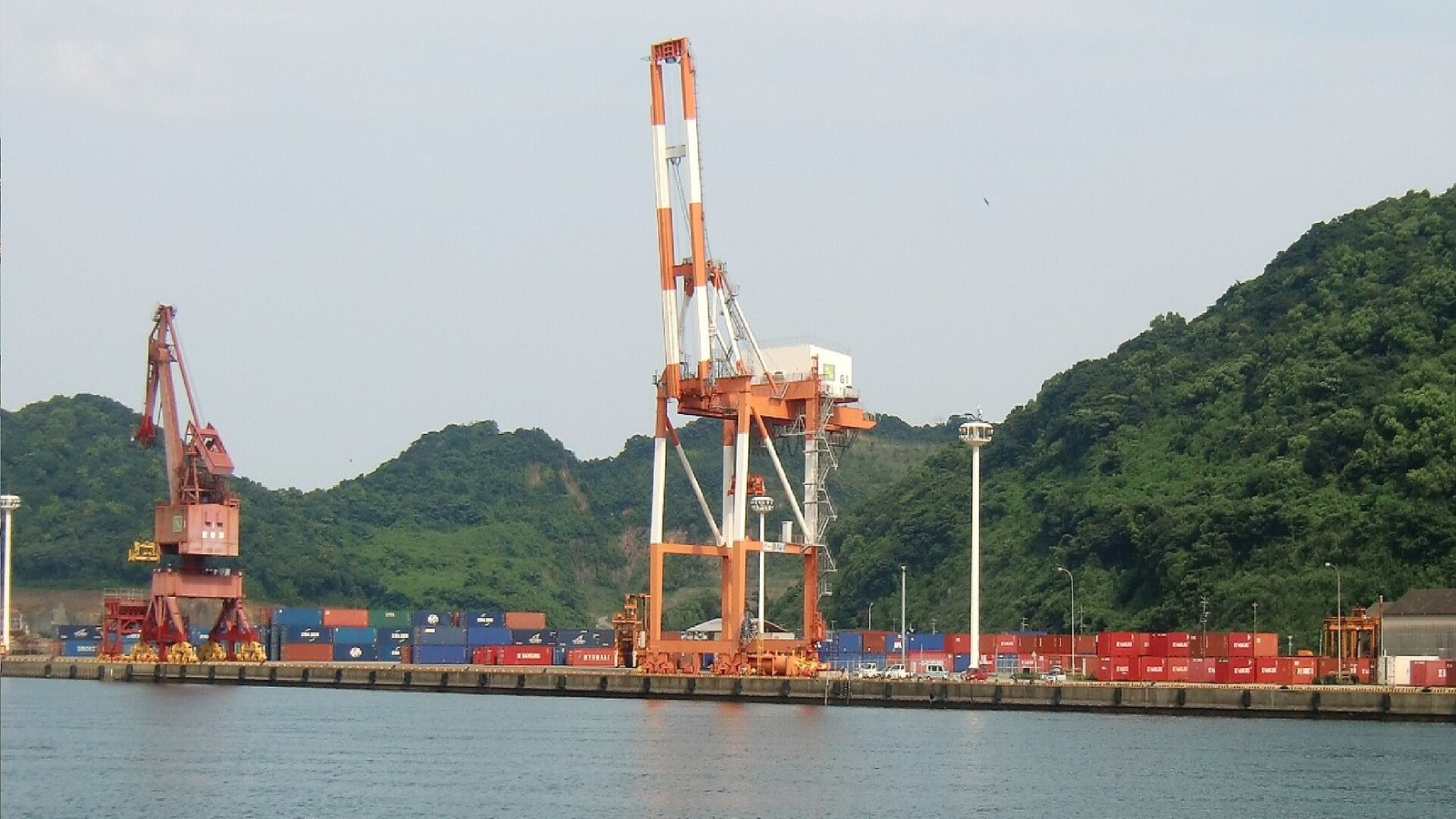
Photo: gantry cranes and containers at a seaport terminal — Gazouya-japan / Wikimedia Commons, CC BY-SA 4.0
In the first five months of 2026, two-way agricultural trade between China and the Association of Southeast Asian Nations reached US$26.68 billion, up 13.6% year on year, according to the China Chamber of Commerce of Foodstuffs and Native Produce, citing customs data. The split tells the story: Chinese exports of farm goods to ASEAN were US$9.26 billion (+2.1%), while imports surged to US$17.41 billion (+20.8%). For the second year running, ASEAN is not only China's largest overall goods-trading partner but also the dominant source of the tropical produce filling Chinese supermarkets. Our trade-insight archive tracks how this corridor keeps reshaping regional commerce.
What's Moving: Durian Leads a Tropical Wave
Durian is the single most revealing commodity. In the first four months of 2026, China imported nearly 356,300 tonnes of the fruit for US$1.7 billion — a staggering 253.8% jump in volume and 207.2% in value versus the same period of 2025, according to VietnamNet, citing the Ministry of Industry and Trade's Import-Export Department. Thailand supplied 288,550 tonnes and Vietnam 62,880 tonnes, together reinforcing a supply corridor that now feeds a year-round Chinese appetite for premium tropical fruit. Vietnam's own fruit and vegetable exports reached an estimated US$2.98 billion in the first five months of 2026, up 29.4% year on year, with China absorbing 49.5% of that sector's export value in the first four months.
The physical gateway is southern Guangxi and Yunnan. At Youyi Guan (Pingxiang), China's busiest land port for fruit, durian imports hit 348,000 tonnes in the first half of 2026, up 57.7% by volume, with a daily average above 3,200 tonnes since May, Xinhua's Guangxi channel reported. Roughly one in three imported durians entering China passes through that single crossing. Yunnan, meanwhile, imported 910,000 tonnes of ASEAN fruit in the first eight months — including 483,000 tonnes of fresh durian — up 31.2% and 35.8% respectively, according to the General Administration of Customs and People's Daily Overseas.
The Logistics Edge: “National-Gate Speed”
Volume this large would clog any border without a logistics revolution — and that is exactly what has happened along the China–Vietnam corridor. At Youyi Guan, nearly 499,000 inbound and outbound vehicle movements were processed in the first five months of 2026, up 40.2%, with goods valued at RMB 295.3 billion (about US$41.1 billion), up 24.4%, VietnamPlus reported, citing local customs. An upgraded smart-clearance system that folds in artificial intelligence, biometrics and big-data exchange has cut single-vehicle border inspection time by 75%, while automated checks on fresh produce can take as little as 20 seconds.
Cold-chain clearance efficiency at the Beilun 2 Bridge (Dongxing) crossing improved by more than 50% year on year, and the first shipment of Cambodian durian cleared there earlier this year. Rail is joining the race: ASEAN cross-border fruit cold-chain block trains now run up to six daily, and produce can reach Nanning from the border in as little as four hours. Guangzhou's Nansha port — China's largest seaport gateway for durian — imported 175,000 tonnes of ASEAN fresh fruit in the first eight months of 2026, with durian, coconut and banana the top three categories.
The Compliance Gate: GACC Order 280
The flip side of the boom is a hardening border for non-compliant shipments. From 1 June 2026, China's General Administration of Customs began enforcing Order 280, which sets new documentation rules for 2,589 imported agricultural products across 20 categories — covering all fruits, fresh vegetables and spices such as chilli, pepper and cinnamon. Goods now clear only with confirmation letters and foreign-enterprise registration codes that precisely match the customs declaration, VietnamNet and Vietnam.vn reported.
Trade analysts read the order as a strategic pivot: Beijing is moving from quantity-based sampling toward stricter, risk-based quarantine assessment conducted at the border, scrutinising raw-material sourcing, processing, transport, storage and compliance history. For exporters, the practical lesson is blunt — meeting Good Agricultural Practice standards, controlling pesticide residues and ensuring packaging transparency is now the price of market access. China is also signing new phytosanitary protocols — fresh jackfruit from Vietnam from 1 June, with accelerated reviews for coconut and frozen durian — to diversify supply and avoid over-reliance on any single origin.
Why It Matters Beyond Fruit
This is not merely a fruit story. The momentum sits on a widening institutional base: 2026 marks the fifth anniversary of the China–ASEAN Comprehensive Strategic Partnership, and the China–ASEAN Free Trade Area 3.0 Upgrade Protocol — signed in October 2025 — lists green trade, green investment and circular economy among eight priority cooperation areas, the Guangzhou Municipal Commerce Bureau noted. At the same time, the Regional Comprehensive Economic Partnership keeps pulling agricultural trade: in January–February 2026 alone, China's farm trade with other RCEP members reached US$17.2 billion, up 17.5%, with imports growing 23.1%. For broader context on how regional trade frameworks evolve, the NEGUP GROUP briefing desk follows these shifts each week.
| Metric | 2026 figure | YoY / note |
|---|---|---|
| Total agri trade (Jan–May) | US$26.68 billion | +13.6% |
| Imports from ASEAN (Jan–May) | US$17.41 billion | +20.8% |
| Exports to ASEAN (Jan–May) | US$9.26 billion | +2.1% |
| Durian imports (Jan–Apr) | 356,300 t / US$1.7 bn | +253.8% vol |
| Youyi Guan vehicle moves (Jan–May) | 499,000 | +40.2% |
| Yunnan ASEAN fruit imports (Jan–Aug) | 910,000 t | +31.2% |
| GACC Order 280 scope (from 1 Jun) | 2,589 products / 20 categories | new barrier |
| RCEP farm trade (Jan–Feb) | US$17.2 billion | +17.5% |
The Outlook
The trajectory points to a maturing but more selective market. Experts forecast China's total fruit imports will approach 15 million tonnes in 2026, yet the easy growth of the past two years is giving way to a regime where speed and compliance are twin currencies. Producers and traders that invest in traceability, cold-chain discipline and protocol-based market access will capture the upside; those treating the border as a formality will find Order 280 an expensive surprise. For the broader China–ASEAN relationship, agriculture has become a quiet engine of integration — one that converts tariff-and-headline geopolitics into everyday commerce measured in tonnes, temperatures and transit times.
Frequently Asked Questions
What is driving the surge in China–ASEAN agricultural trade in 2026?
Two forces. Demand for tropical fruit is booming — durian imports alone jumped 253.8% by volume in the first four months of 2026 — and border logistics have been rebuilt for speed: smart clearance on the China–Vietnam corridor processes fresh produce in as little as 20 seconds and has cut vehicle inspection time by up to 75% (VietnamNet; VietnamPlus).
What is GACC Order 280 and how does it affect exporters?
Effective 1 June 2026, China’s General Administration of Customs requires confirmation letters and foreign-enterprise registration codes that match the customs declaration for 2,589 imported agricultural products across 20 categories, including all fruits, fresh vegetables and spices. It shifts clearance from quantity-based sampling to stricter, risk-based quarantine assessment at the border (VietnamNet; Vietnam.vn).
Which ASEAN countries supply China’s tropical-fruit boom?
Thailand and Vietnam lead durian exports to China — 288,550 tonnes and 62,880 tonnes respectively in the first four months of 2026 — while Yunnan’s imports also draw on Laos, Cambodia and Indonesia. China is signing new phytosanitary protocols, such as fresh jackfruit from Vietnam from 1 June, to broaden its supplier base (VietnamNet; GACC / People’s Daily Overseas).
How large is China’s fruit import market?
Agricultural trade analysts expect China’s total fruit imports to approach 15 million tonnes in 2026. Guangzhou’s Nansha port, the country’s largest durian gateway, handled 175,000 tonnes of ASEAN fresh fruit in the first eight months of 2026 alone (VietnamNet; Guangzhou Municipal Commerce Bureau).
Why does this matter beyond fruit?
Agriculture has become a quiet engine of China–ASEAN integration. It sits on the FTA 3.0 Upgrade Protocol signed in October 2025 and on RCEP, which lifted China’s farm trade with RCEP members by 17.5% in early 2026. Trade friction now shows up in tonnes, temperatures and transit times rather than headlines (Guangzhou Municipal Commerce Bureau; China Chamber of Commerce of Foodstuffs and Native Produce).
NEGUP Group publishes a trade brief every week. Talk to us about sourcing, quality control and consolidated logistics.
WhatsApp +86 153 0769 0902